Skipping proper seismic microzonation in Richmond is how projects get blindsided by amplification factors that the generic NBCC maps never capture. The city sits on deep Fraser River delta deposits and a high water table at barely 1 meter above sea level. That combination makes site-specific ground response analysis non-negotiable for any structure taller than three storeys. We stopped counting the number of foundation redesigns we’ve seen because someone assumed uniform Site Class C across a parcel that actually transitions into Site Class E within 40 meters. Before the City demands a peer review, it’s smarter to integrate microzonation findings with the CPT testing program so the stratigraphy and cyclic resistance feed directly into the response spectrum you submit for building permit.
Richmond’s deltaic silts can amplify short-period ground motion by a factor of 3 compared to the NBCC default. That’s the difference between a structure that survives and one that doesn’t.
Methodology applied in Richmond BC
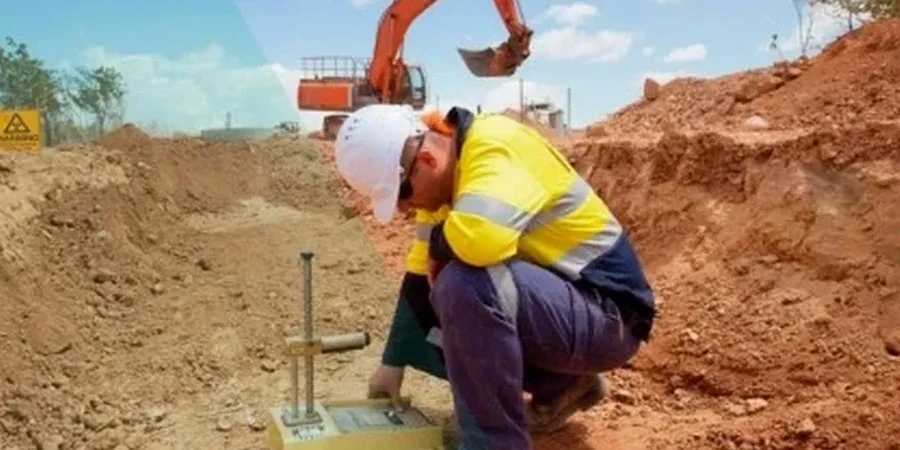
Critical ground factors in Richmond BC
Richmond recorded peak spectral accelerations that exceeded design values during the 2001 Nisqually earthquake, even though the epicenter was 230 km away. That’s what basin-edge effects do. The Fraser River delta traps and amplifies long-period energy, and the soft organic clays between 5 and 25 meters depth can degrade stiffness by over 40% under cyclic loading. A building designed with a uniform Site Class C assumption on a parcel where the actual Vs30 drops below 180 m/s faces a seismic demand underestimate of 30 to 50%. We’ve seen insurance carriers in Metro Vancouver start asking for microzonation reports before binding coverage on commercial projects. The City of Richmond’s own geotechnical review panel now routinely flags submissions that rely solely on regional hazard maps without site-specific ground response analysis.
Our services
Our seismic microzonation package covers everything the City of Richmond and your structural engineer need to lock in the design spectrum.
Site-Specific Response Spectrum
Uniform hazard spectra at the foundation elevation, not ground surface. Accounts for impedance contrast at the pile cap level.
Vs30 Mapping and Site Class Determination
Grid-based shear wave velocity profiling across the parcel with interpolated site class boundaries for irregular footprints.
Liquefaction Hazard Overlay
Lateral spread displacement and post-liquefaction settlement integrated directly into the microzonation report.
Peer Review Support Package
Complete model files, input motions, and modulus reduction curves formatted for third-party review by City-hired consultants.
FAQ
When does the City of Richmond require seismic microzonation instead of just NBCC site classification?
Richmond’s geotechnical review panel typically requires site-specific microzonation for essential facilities, buildings over 4 storeys, and any structure on Site Class D or E soils where the fundamental period exceeds 1.0 second. The threshold appears in the City’s Geotechnical Review Guidelines and gets enforced at the development permit stage. If your parcel shows more than 3 meters of soft organic silt, expect the reviewer to request a ground response analysis regardless of building height.
What’s the typical turnaround time for a microzonation study in Richmond?
Field work takes 2 to 4 days depending on the number of CPT and downhole locations. Lab testing on undisturbed samples adds 3 to 4 weeks for resonant column and cyclic triaxial results. The analysis and reporting phase runs 2 to 3 weeks. Plan on 6 to 8 weeks total from mobilization to the stamped final report. We can expedite to 4 weeks if the project qualifies for priority scheduling and the City accepts preliminary spectra for early foundation design.
How much does a seismic microzonation study cost for a typical Richmond commercial lot?
For a standard commercial lot of 2,000 to 5,000 square meters, the complete study ranges from CA$4,960 to CA$25,300 depending on the number of investigation points, depth of profiling, and whether lab testing includes resonant column or just cyclic triaxial. A single-point investigation with Vs profiling and basic site response runs at the lower end. A full grid with 2D basin modeling, multiple boreholes, and advanced lab characterization reaches the upper range.
Can you use existing CPT data from our previous geotechnical investigation?
Sometimes. If the CPT logs include shear wave velocity measurements taken with a seismic cone and the data is less than 2 years old, we can incorporate it into the site response model. Standard piezocone data without Vs profiling doesn’t deliver enough constraint on small-strain stiffness, so we’ll need at least one new downhole location to calibrate the modulus reduction curves. We’ll review your existing logs at no charge and tell you what’s reusable.