Building on Lulu Island demands a frank acknowledgment of what lies beneath. A soil mechanics study in Richmond BC must contend with the distinct geological contrast between the east and west sides of the city. West of No. 3 Road, the terrain is underlain by thick sequences of Salish silts—deposited by the Fraser River over millennia—which exhibit significant compressibility and potential for cyclic softening. Eastward toward the river channel, sandier facies and interbedded lenses create a more complex drainage regime, where pore pressure dissipation can behave very differently. This duality means a standardized investigation approach is inadequate. Our geotechnical team has executed hundreds of borehole programs across the municipality, from the industrial lots of Mitchell Island to the residential expansions near Steveston. We pair deep knowledge of local stratigraphy with advanced triaxial testing to quantify effective stress parameters, ensuring foundation recommendations are grounded in the island's real depositional history and not generic textbook assumptions. Whether your site is underlain by compressible organic silts or loose hydraulic fill, the analysis must reflect the specific Holocene deltaic environment that defines Richmond's subsurface.
In Richmond's deltaic environment, effective stress analysis isn't optional—it's the only reliable path to quantifying true long-term settlement.
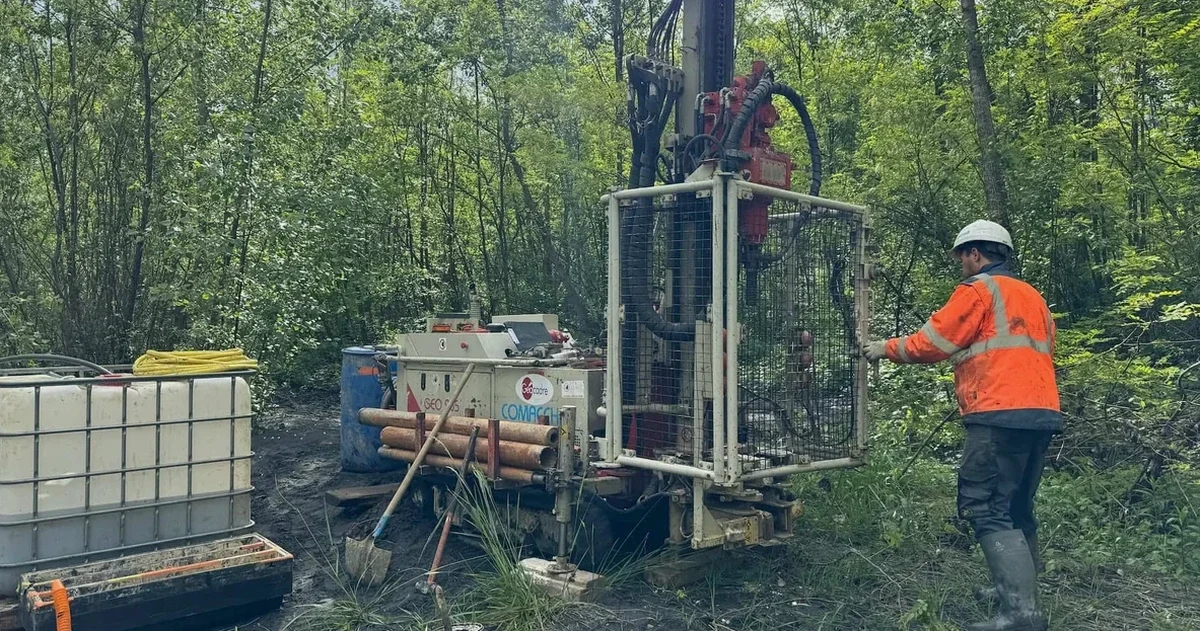
Methodology applied in Richmond BC
Critical ground factors in Richmond BC
The Fraser River delta carries a well-documented susceptibility to seismic soil failure, a reality that must be confronted in any rigorous soil mechanics study in Richmond BC. The combination of loose, saturated sandy layers and a shallow water table creates conditions ripe for liquefaction during a design-level earthquake. Deep, moderate-to-high sensitivity silts also present a risk of post-earthquake strength loss and cyclic softening, which can translate into sudden, substantial settlement or lateral spread displacements. Ignoring these mechanisms in the analysis phase can lead to differential movements that exceed the tolerance of both superstructure and buried utilities. Our investigation protocols include site-specific seismic site response analysis and liquefaction triggering assessments based on CPT or SPT data. We quantify the factor of safety against flow liquefaction and estimate ground deformations so that mitigation measures—whether densification, stone columns, or deep foundations—can be rationally selected and integrated into the project's structural design before costly excavation begins.
Our services
Our soil mechanics study in Richmond BC is structured as a comprehensive engineering service that takes a project from initial subsurface characterization through to final design parameters. The scope is tailored to the complexity of the deltaic environment, combining field exploration with targeted laboratory testing.
Field Exploration and Sampling
Execution of mud-rotary and hollow-stem auger borings to depths of 15 to 30 meters, with continuous SPT sampling and undisturbed Shelby tube retrieval in the soft silt layers typical of Richmond's subsurface.
Advanced Laboratory Testing
A testing suite including consolidated-undrained triaxial tests, incremental oedometer consolidation, and index property analysis, all performed under the supervision of a licensed professional engineer.
Engineering Analysis and Reporting
Interpretative report delivering bearing capacity, total and differential settlement predictions, seismic liquefaction assessment, and recommendations for shallow or deep foundation systems.
FAQ
What does a soil mechanics study in Richmond BC typically cost?
For a standard single-family residential lot on Lulu Island, the cost for a soil mechanics study typically ranges from CA$4,130 to CA$6,890. The final figure depends on the number of boreholes required, the depth of exploration, and the complexity of the laboratory testing program specified by the project's geotechnical engineer.
How many boreholes are needed for a soil mechanics study on a typical Richmond lot?
For a standard residential or light commercial structure, two to three boreholes are generally recommended, extending to a depth of at least 15 meters or until competent bearing strata are encountered. The exact number and depth are determined by the NBCC and the specific variability of the Fraser Delta soils on your property.
Why is seismic analysis critical for a soil mechanics study in Richmond?
Richmond's location within the Cascadia Subduction Zone and its underlying deltaic soils place it in a high seismic hazard category. A standard study must include a liquefaction potential assessment because the loose, saturated silts and sands common across the city can lose strength dramatically during earthquake shaking, leading to catastrophic foundation failure.
How long does it take to complete the fieldwork and final report?
Field drilling operations are usually completed in one to two days. After sampling, the laboratory testing phase requires approximately two to three weeks, depending on whether consolidation or triaxial tests, which take longer to run, are needed. The final geotechnical report is typically delivered within four weeks of the fieldwork completion.
What is the difference between a soil mechanics study and a simple bearing capacity check?
A simple bearing check only answers whether the soil can support a given load at a shallow depth. A full soil mechanics study is far more comprehensive; it also quantifies how much the ground will settle over time under that load, assesses lateral earth pressures for basement walls, and evaluates seismic risks like liquefaction—all of which are critical considerations for any permanent structure in Richmond's delta.