In Richmond, the ground beneath our feet tells a story shaped by the Fraser River. The city sits on a delta of thick, compressible marine and alluvial silts and clays, a fact that makes compaction control one of the most scrutinized steps on any job site. A standard Proctor value from the lab means little until it is verified against the actual fill placed against Richmond's high water table and soft native subgrade. The field density test, executed with the sand cone apparatus per ASTM D1556, gives us that verification directly on the lift. It is not a speculative number; it is a direct measurement of the in-place dry density, and when we couple the result with a grain size analysis of the fill material, we can pinpoint exactly why a lift is meeting or failing specification. For deeper investigations into the native soils that will support the compacted fill, many Richmond projects also integrate CPT testing to profile the underlying deltaic deposits before earthworks begin.
A ninety-eight percent compaction result on a Richmond silty sand fill means the lift is structurally integrated, not just a number on a report.
Methodology applied in Richmond BC
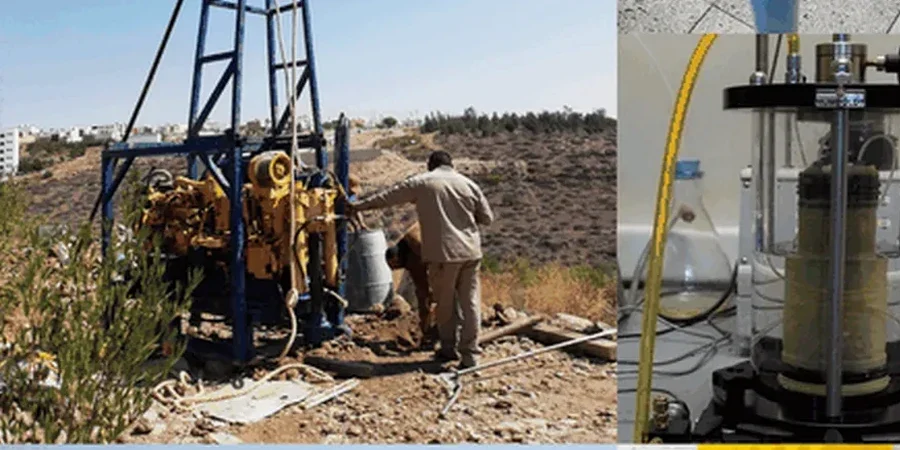
Critical ground factors in Richmond BC
Richmond's average elevation is just one meter above sea level, and the groundwater table often sits within a meter of the surface. This hydrogeological reality means that fill placement and compaction occur in a constant battle against saturation and pore pressure buildup. A density test taken on a lift that has wicked moisture from below can produce a misleadingly high dry density reading if the sample is not correctly handled for moisture content, or worse, the test hole can collapse before the sand is poured. The sand cone method itself becomes less reliable in granular soils below the water table, where pumping and boiling can distort the cavity. Overlooking a failed compaction test in a shallow footing zone here, on the compressible deltaic clays mapped by the Geological Survey of Canada, risks differential settlement that can crack slab-on-grade foundations within the first five years. The interaction between the compacted structural fill and the native soft clay requires that the density test be paired with a careful assessment of the slope stability of any adjacent excavations or dike structures, which are critical in Richmond's floodplain environment.
Our services
Our field density verification program in Richmond extends beyond a single test method to cover the full scope of earthwork quality assurance. Each service is executed by technicians trained specifically on the Fraser River delta's soil behavior.
In-Situ Density by Sand Cone Method
Direct field measurement of lift density using the calibrated sand cone apparatus, reported as percent relative compaction against your project's Proctor reference. We test structural fill, utility trench backfill, and road subgrade materials, providing immediate pass/fail feedback to the site superintendent.
Nuclear Gauge Density Correlation
Correlation of nuclear densometer readings with sand cone reference values to accelerate large-area testing on major Richmond developments. We build a site-specific calibration curve that accounts for the mineralogy of imported fill, allowing the speed of nuclear testing without sacrificing the accuracy of the direct volume-replacement method.
FAQ
What is the typical cost of a sand cone field density test in Richmond?
For projects in the Richmond area, a single sand cone density test typically ranges from CA$120 to CA$200 per test location, depending on the number of tests scheduled per mobilization and the project's location. A minimum mobilization fee may apply for small-volume requests. This covers the calibrated sand, the graduated cone apparatus, the technician's time on site, and the signed, stamped report documenting the percent compaction achieved.
At what depth does the sand cone test measure density?
The test measures the density of a single compacted lift, which is usually between 100 and 150 mm thick after compaction. The technician excavates the test hole through the full depth of the lift to the surface of the underlying layer, ensuring the measurement represents the entire thickness of the placed material, not just the surface crust.
How do you prevent the test hole from collapsing in Richmond's silty soils?
Richmond's silts and fine sands can cave in if the excavation is too deep or the soil is too dry. Our technicians dig a carefully shaped hole with minimal disturbance to the sidewalls and proceed with the sand-pouring operation immediately after excavation. In borderline materials, we use a template plate to stabilize the surface and work quickly to beat any moisture migration that could soften the cavity walls.
Which ASTM standard governs the sand cone procedure?
The field procedure follows ASTM D1556, 'Standard Test Method for Density and Unit Weight of Soil in Place by Sand-Cone Method.' The laboratory maximum dry density to which the field result is compared is determined by ASTM D698 for standard Proctor effort or ASTM D1557 for modified Proctor effort, as specified in the project's earthwork specification.